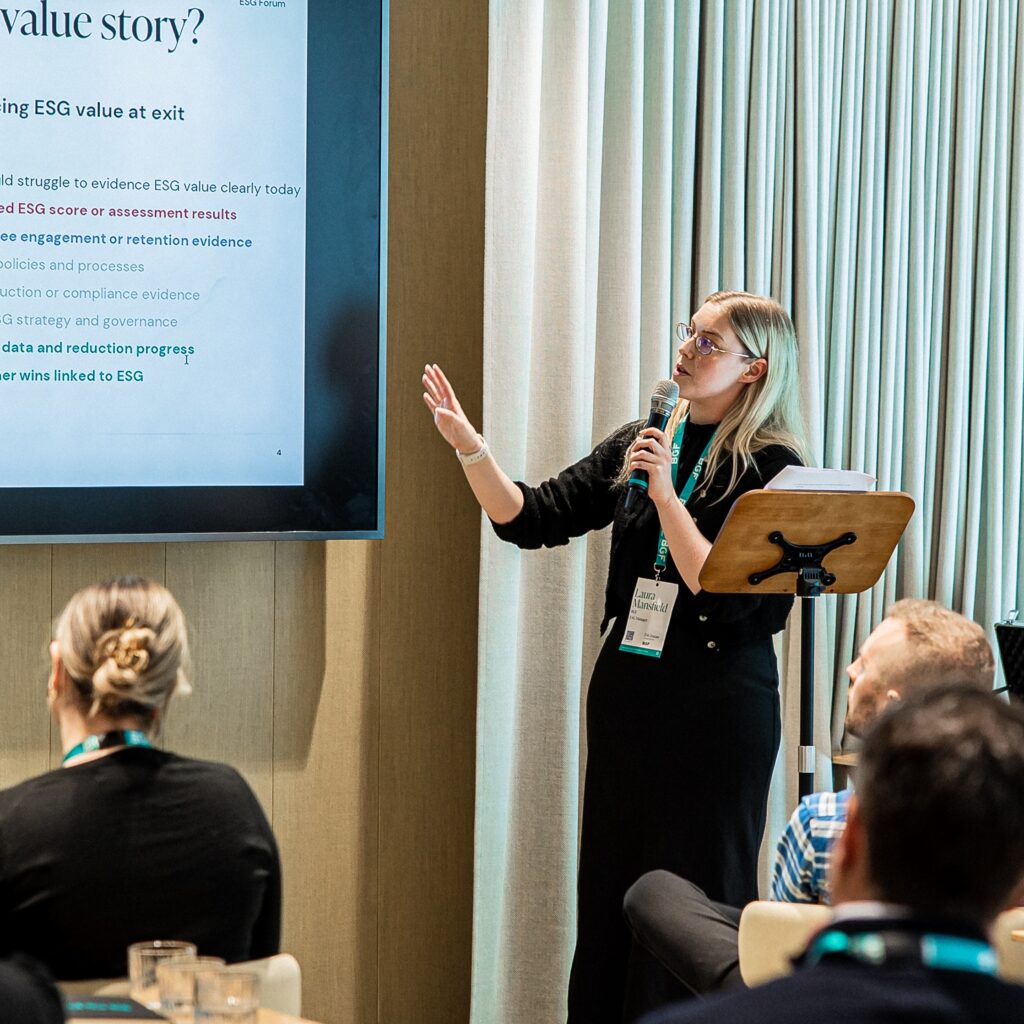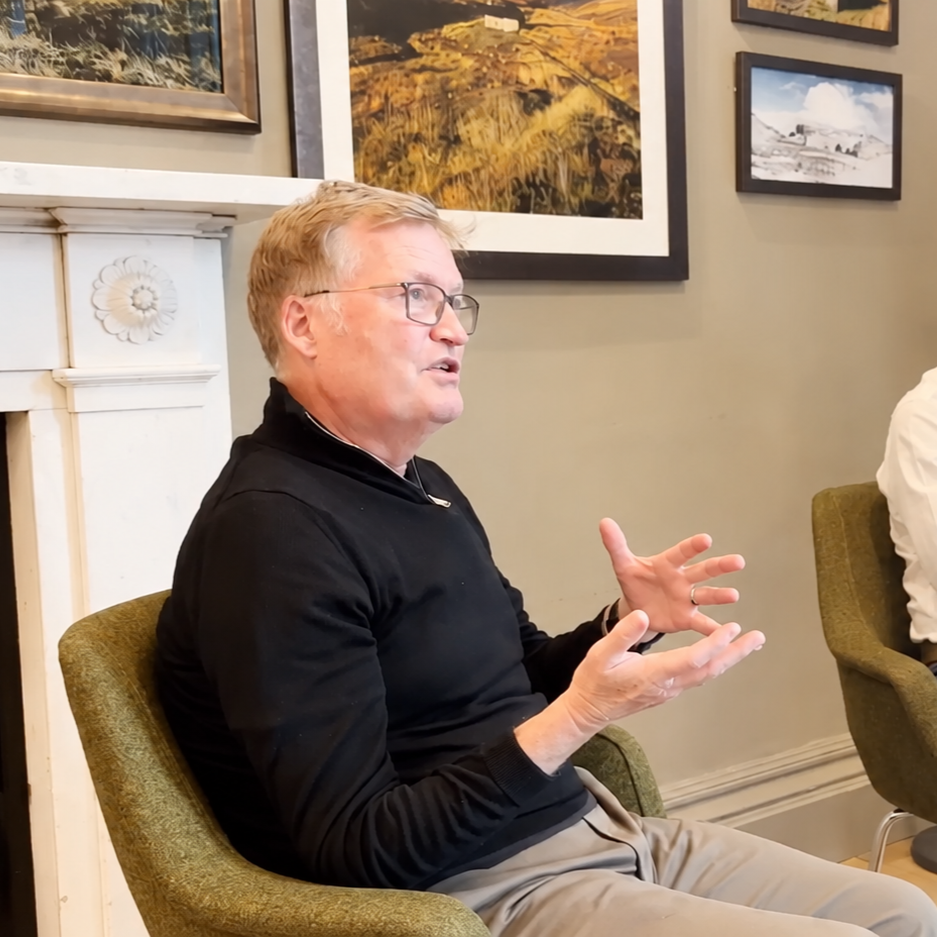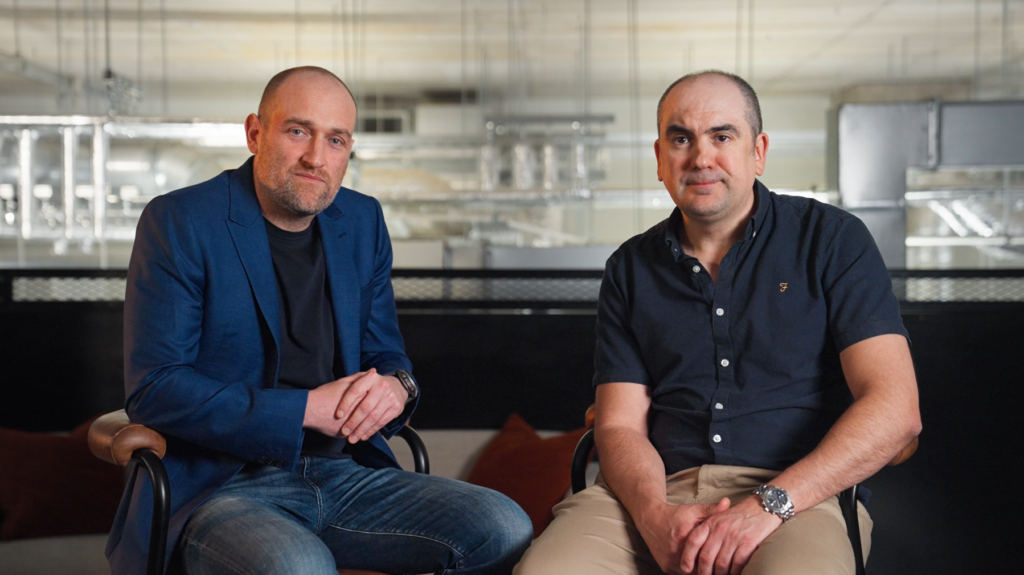





From seed to series A, B, C and beyond, fundraising is one of the key challenges facing deep tech startups, as they scale. At a recent workshop for our Early Stage deep tech portfolio, we brought together founders, experienced operators and advisors, to discuss the many nuances of deep tech fundraising, and how best to tackle this challenge.
The consensus was that it’s rarely a smooth curve of bigger rounds at higher prices for more capital-intensive companies. Instead, the deep tech funding journey is a series of distinct risk regimes, backed by different capital providers, structures and expectations. Forward planning across multiple funding rounds is key, therefore, to driving success: work backwards from your desired outcome, be clear on what backers look for at each stage, and proactively shape your business accordingly.
Risk mitigation, not round accumulation
Many founders and investors still talk about the funding journey in round labels: pre-seed, seed, series A, B, C, etc. But a more useful lens in deep tech funding may be the risk profile you’re asking capital to underwrite.
Technology risk, for instance, often dominates at seed and series A. Your focus is on turning concepts into something tangible: proving the science works outside of the lab, and that there’s a clear and credible commercial vision. At this stage, technology readiness levels (TRLs) are progressing, but unit economics are usually modelled, rather than proven. Capital providers tend to be patient, upside-oriented and focused on the narrative.
As you move from series A to series B though, translational risk begins to dominate. Your attention shifts to proving that your technology works in real-world environments and in the hands of real customers, not just controlled pilots. At this point, deep tech startups are typically raising equity funding (particularly in the UK), with investors looking for technical validation, strong unit economics potential, and a credible route to commercialisation, including pipeline visibility.
Investors also look for execution-led teams, rather than technology-led, at this stage. They want to see a broader management team, exhibiting a healthy degree of tension between science, sales and spreadsheet. It’s important, therefore, that you’re being proactive and hiring experienced plant builders, and realistic that team evolution may be needed.
Beyond this point, from series C onwards, execution and market risk then dominate. Capital is frequently equity-led, but supported by debt, and investors often underwrite downside protection, time-bound profitability and a credible scale-up plan. They now care less about what’s possible and more about what’s predictable.
In the later stages, global scale is often unlocked by infrastructure-style investing. Rounds can run into the hundreds of millions, and the capital base tilts towards infrastructure and project finance. Asset-level, non-recourse debt (much cheaper than equity), secured by the projects’ cashflows and assets, rather than the company’s balance sheet, becomes a viable funding option.
Investors now demand predictable unit economics, signed commercial contracts and proven execution, as well as near total risk mitigation. This means fixed-price engineering, procurement and construction (EPC) contracts, secured long-term offtake agreements and locked-in feedstock supplies at stable prices.
The FOAK funding inflection point
For those that need it, the step from series A/B to first-of-a-kind (FOAK) funding is often the make-or-break milestone. It’s the transition from running a small pilot to building your first full-scale commercial facility, and often requires a step change in cheque size (with rounds frequently reaching £20m-£125m+, depending on a company’s requirements and ambitions).
This isn’t a ‘more of the same’ equity round either. It requires careful management of risk appetite, across technology, translational, execution and market factors, given the necessary mix of funding across:
- Equity (often from new and existing investors, representing a mix of narrative-focused, earlier-stage investors and investors focused on ‘bankability’ of the technology and plan)
- Grants (often large, slow processes that are highly competitive)
- Debt (specialist lenders or banks, who focus on cashflow and are often so specialised that they struggle to deploy capital)
Key takeaways and strategies for success
From the considerable experience of running, funding and scaling deep tech startups – as well as BGF’s considerable experience of investing in these businesses – the workshop highlighted the following key elements of a successful deep tech fundraising strategy:
- Milestone-based planning: Raise what you need to get to your next value inflection point, with sufficient runway to absorb the inevitable delays and cost overruns. Hit those milestones reliably and build momentum.
- Build strong relationships with capital allocators: Build relationships with later-stage equity investors, grant-funding bodies and debt providers well-ahead of time, so you can shape your business accordingly and maintain momentum, by avoiding significant fundraising delays.
- Team expansion and mindset shift: Don’t be afraid to bring in operational and commercial leadership before they’re necessary. Acknowledge when your company needs to move from an evangelical, technology-led narrative to being laser-focused on execution capabilities. Building an actual plant or hardware at commercial scale is very different to R&D and pilot phases; your key value drivers become project management, cost control, HSE (health, safety and environment) compliance, supply chain execution and repeatability, instead of just tech prowess.
- Modularity: The elephant in the room – but reducing the capital intensity of your scale-up journey does increase the probability of your success. If possible, design a ‘fabless’ model or build modularly, to avoid unnecessary scale-up risk.
- Strategic investors: Well-aligned strategic investors can provide you with patient capital, industry know-how, access to engineering and procurement contractors, and possibly also a contractual feedstock or offtake agreement.
Ultimately, the fundraising journey from seed to scaleup is a progression of risk reduction and capability building. By thinking multiple rounds ahead, engaging the right partners early, and progressively shifting from an R&D to execution mindset, deep tech founders can successfully chart a path from lab bench to large-scale impact.