Solving the battery world’s bottleneck
Gaussion, a University College London spinout, is rethinking battery performance from first principles. It’s developed a transformative solution that enhances lithium-ion (Li-ion) batteries using magnetic fields, regardless of cell chemistry and type.
We’re always looking for deep tech breakthroughs like Gaussion’s that can address global bottlenecks in scalable, commercially viable ways. And few challenges are more urgent (or more economically significant) than making batteries faster-charging, longer-lasting, and more cost-effective.
The problem: fast charging still isn’t solved
Global demand for Li-ion batteries is expected to increase more than 6x between 2022 and 2030 (from 700 GWh to 4.7 TWh), representing a CAGR of ~27%. The reason? Li-ion batteries are at the heart of the electrification of transport, infrastructure and energy, and the global shift towards cleaner energy.
But we’re still hitting an inconvenient truth: batteries do not like being fast-charged — a necessity for the mass adoption of electric vehicles (EVs) and other battery use cases. Fast charging causes excessive heat, degradation, and reduced cycle life, which shortens warranties, slows consumer adoption, and inflates lifetime costs.
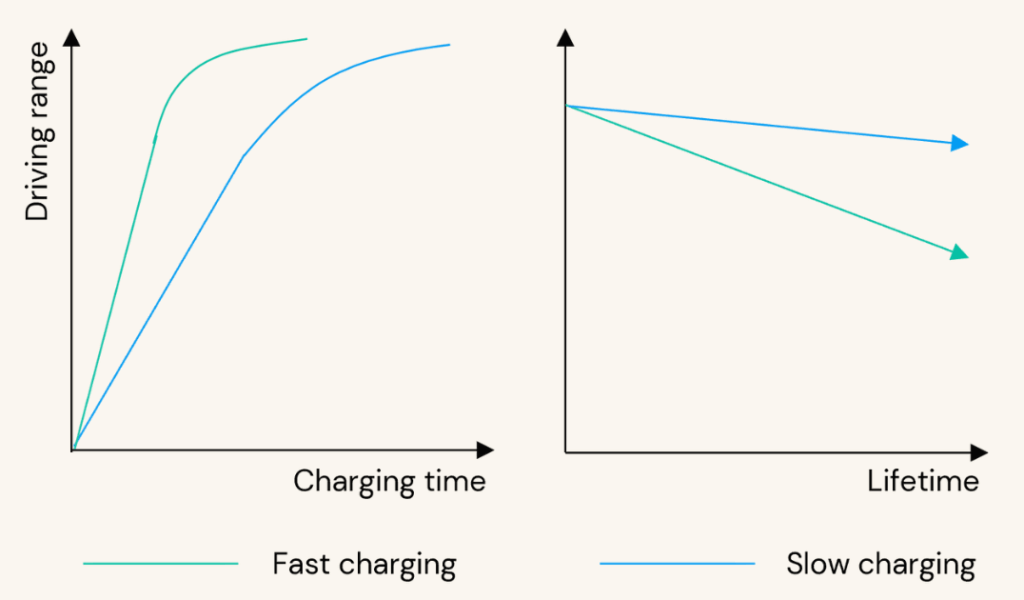 Variation of driving range with charging time and lifetime for EVs
The solution: MagLib
While most solutions look to develop new materials or cell chemistries to improve the underlying performance of batteries — paths that often take decades to commercialise — Gaussion is going straight to the source: the ion dynamics inside the cell during charging.
The company is pioneering an auxiliary solution to fast charging, based on a magneto-electrochemical approach. Their proprietary technology, known as MagLib, achieves:
- More than 2x faster charging — providing an average EV driver with a week’s worth of driving in under 10 minutes, versus 20-40 minutes for an average fast charger
- 2x cycle life — mitigating the degradation typically associated with fast charging, to maintain warranty criteria after 1,000+ charges, versus 400-600 with regular fast charging
- Cross-chemistry compatibility — agnostic of the battery cell chemistry (NMC, LFP, LCO, and more), to enable quick and easy adoption
Why we invested in Gaussion
We first invested in Gaussion in 2022, at the seed stage, and then provided follow-on funding in 2024. Here’s why we’re excited about where they’re heading:
Genuinely breakthrough physics
Gaussion’s technology is scientifically proven and commercially validated — and has the potential to revolutionise fast charging.
True cross-sector potential
Credible applications across grid storage, EVs, and battery formation, representing a multi-billion-dollar TAM (total addressable market) by 2030.
Strong IP and product strategy
With a growing portfolio (40+ filings, across 11 families) and a defensible combination of hardware and control software, Gaussion is well positioned for scale and licensing.
Exceptional team
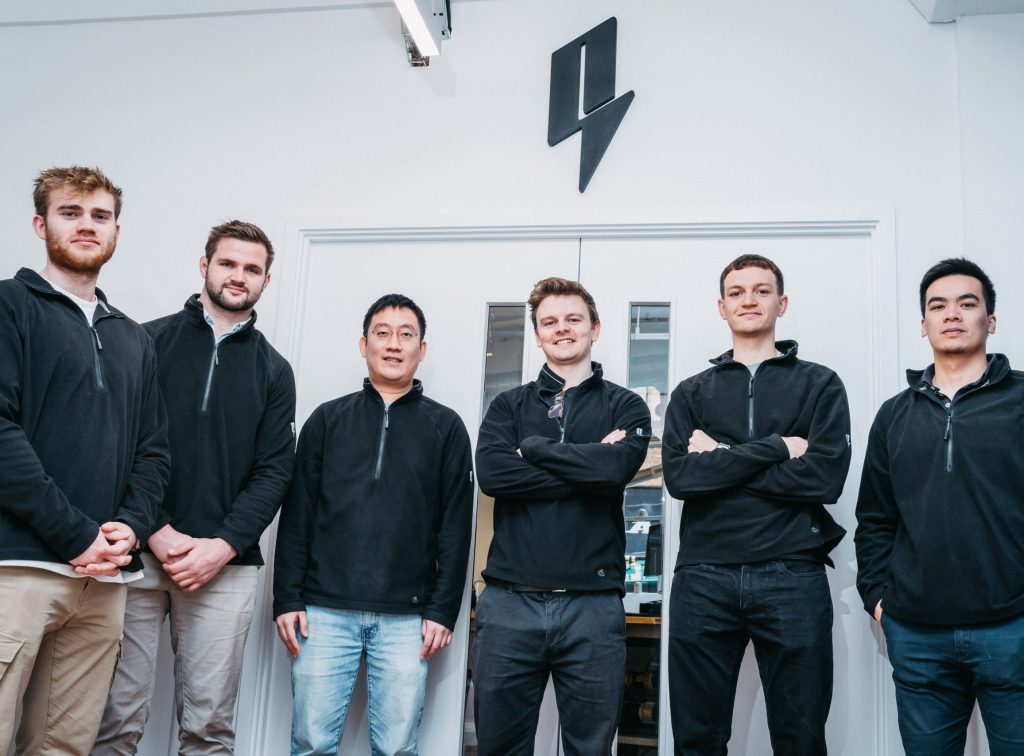
Gaussion’s founders, Tom Heenan and Chun Tan, combine technical brilliance with grounded commercial instincts. With Chair John Miles (former Chargemaster and MyEnergi), they’ve built a tight and credible leadership team.
“Gaussion is an innovative business that has developed a unique solution to one of the most pressing issues in the EV battery space. Strong progress so far, led by an exceptional team, highlights the potential of their technology.”
Dennis Atkinson
Co-Head of Early Stage at BGF
What’s next?
Gaussion is currently scaling pilot programmes with leading energy and automotive partners, while building the commercial infrastructure required for global deployment. We’re proud to be backing the team on their path to becoming a defining player in the next generation of battery innovation.
“BGF brings the best of both worlds: the backing of a major fund and the hands-on support of people who really care about founders. We’re delighted to have them supporting us for the next stage of our journey.”
Tom Heenan
CEO & Co-Founder of Gaussion