Insights
What makes a successful cross-border business?
12 November 2026
International expansion can open new revenue streams, diversify a customer base and improve the long-term resilience of a scaling business. But moving into a new market is only the start. Sustained global growth requires management teams to decide where they have a genuine right to win, how much resource to commit and how the operating model should evolve as an organisation’s footprint grows.
We spoke to 300 SME leaders across the UK and Ireland to understand how they are approaching internationalisation in practice.
The findings show strong appetite to explore overseas expansion, but also highlight the importance of preparation, market selection and operating discipline. Read on to dive into the data and hear perspectives from our go-to-market specialists and portfolio companies.
Internationalisation is about more than revenue
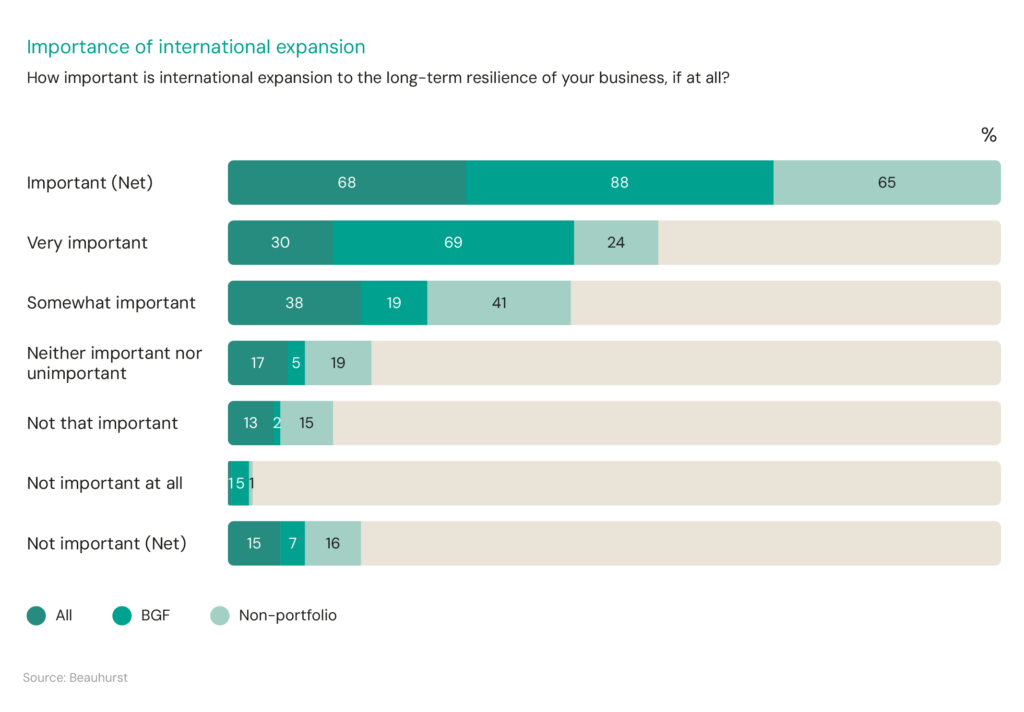
Presence in multiple markets is increasingly seen as a way to improve business resilience. More than two thirds of respondents (68%) say international expansion is important to the long-term resilience of their business, while 57% are more likely to pursue it than they were two years ago.
Although revenue growth remains the most cited benefit, selected by 59% of respondents, the motivations extend further. Two in five (40%) see expansion as a route to new opportunities, while 36% point to greater resilience and 35% cite access to talent.
For growth businesses, that means being clear on the objective before choosing the geography. Entering a new market may be about finding additional customers, but it can also diversify the revenue base, widen access to skills or reduce reliance on a single domestic market.
Global growth isn’t always planned
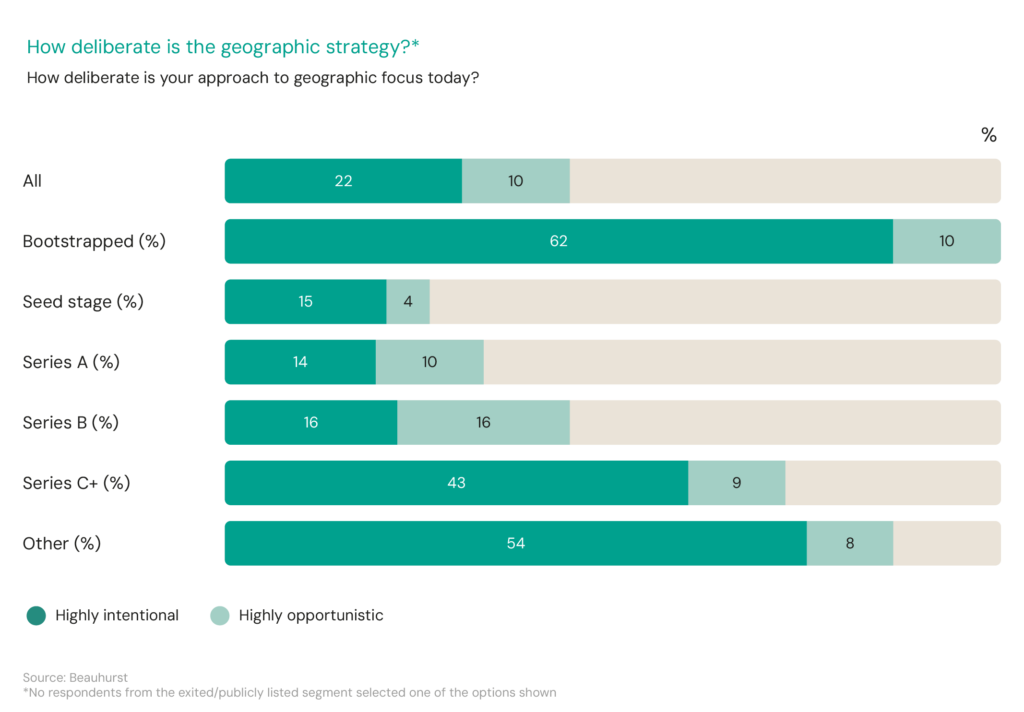
More than two thirds of respondents (68%) are confident they can replicate their domestic success internationally. However, only 22% describe their international strategy as highly intentional, while 34% characterise it as opportunistic.
After all, international growth often begins that way. A new customer, partner or inbound enquiry can provide the first signal that a business has potential in another market. The key is determining whether that early demand can become repeatable before committing significant management time and capital.
There’s no need for management teams to remove opportunism. Instead, they need to turn those early signals into a more structured growth plan – testing the opportunity, setting clear criteria for success and increasing commitment as the evidence builds.
Expansion rarely happens exactly as planned. Often, the first signal comes from the market itself: an overseas customer, a new partner or unexpected demand from somewhere new. Spotting the opportunity is the easy part. The real challenge is deciding when to act, how much to invest and whether your business is ready to grow with the opportunity.
Andrew Taylor
Head of Go-To-Market, BGF
Choosing a market takes more than demand
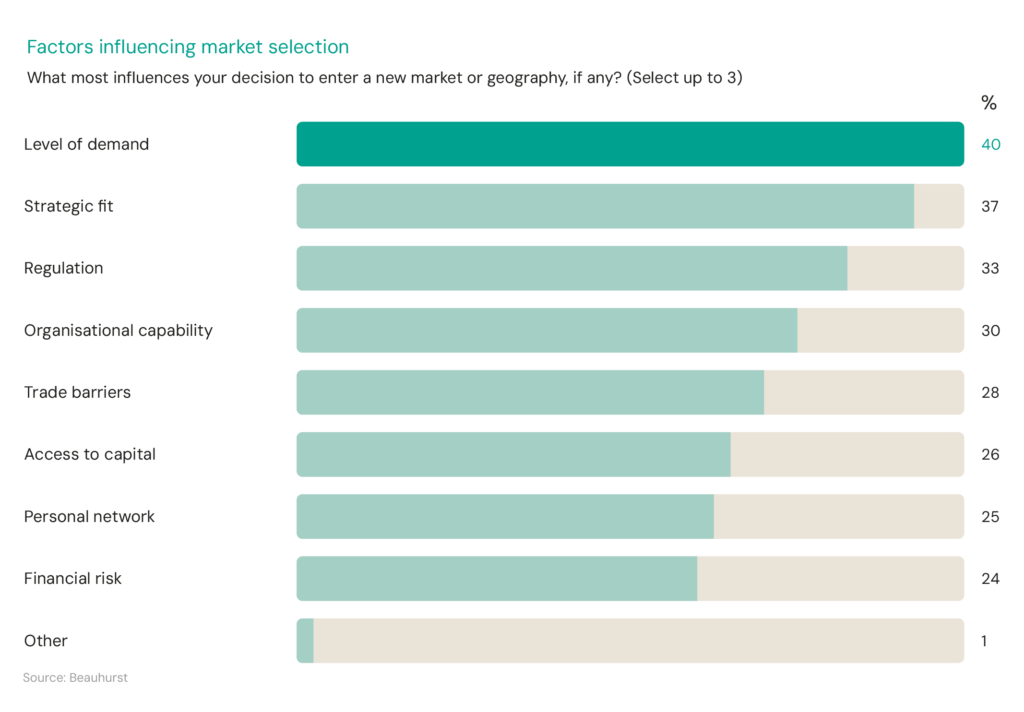
Demand is the most frequently cited factor when selecting a new market, chosen by 40% of respondents. Strategic fit follows at 37%, with regulation (33%) and organisational capability (30%) also prominent.
The findings underline the mix of factors at play, and why aiming for the biggest addressable market is not automatically the best move. Customer fit, competition, regulation, pricing and the organisation’s ability to execute can all shape whether a business has a realistic opportunity to succeed.
Future market priorities suggest a changing geographic picture. Europe accounts for around half of respondents’ existing international footprint, ahead of North America and Asia. When businesses look at future opportunities, however, the gap narrows considerably, with Europe and Asia cited at similar levels.
The question for management teams is therefore less about identifying the market with the largest potential and more about understanding where the business has the strongest right to win.
Internationalisation quickly becomes an operating challenge
Generating demand is only one part of international growth. Businesses also cite hiring and managing talent (33%), regulatory and legal issues (32%) and operational complexity (29%) among the principal barriers to expansion.
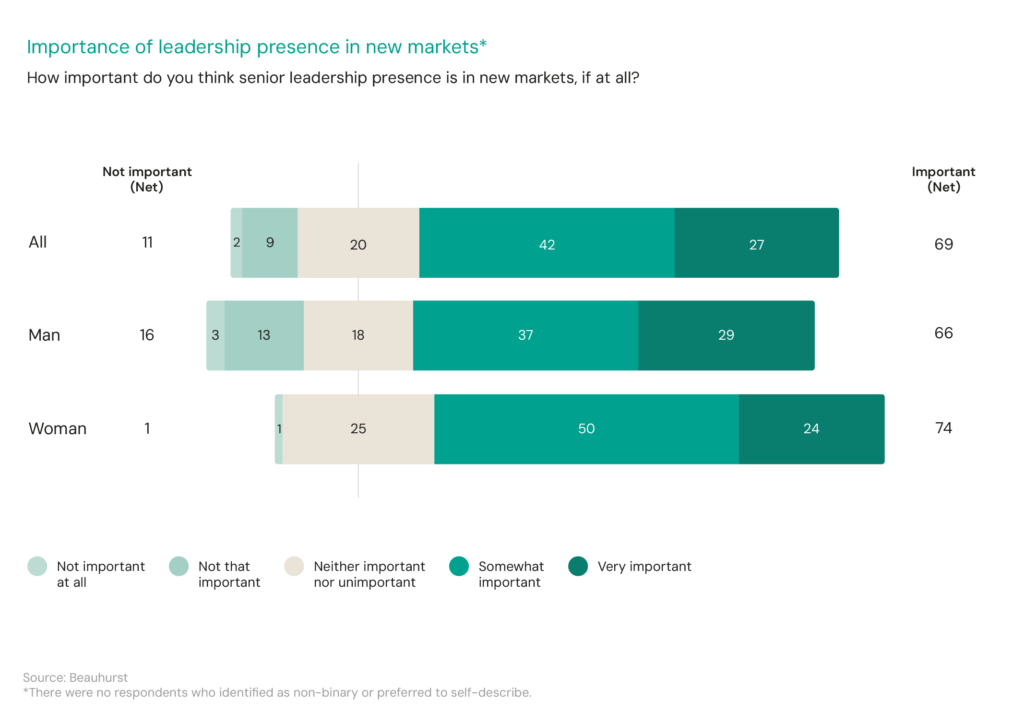
Leadership and local decision-making are also significant. Nearly seven in ten (69%) respondents believe senior leadership presence in a new market is important, while 89% favour giving local teams either moderate or high levels of autonomy.
That creates a balancing act. Local teams need enough freedom to respond to customers and market conditions, while remaining connected to the wider organisation on areas such as strategy, brand, financial controls and culture. Those pressures can increase as businesses mature. Among Series C+ respondents, 44% cite operational complexity as a challenge and 48% point to maintaining company culture.
For management teams, internationalisation therefore needs to be considered as an organisational challenge as well as a commercial one. The operating model must develop alongside the geographic footprint.
Our core values – share, wonder and delight – remain consistent wherever we operate, but how they are expressed can vary. Job titles, communication styles and employment practices may need to reflect the local market. The important thing is to be clear about what is fundamental to the business and where teams have permission to adapt.
Paramjit Uppal
Founder, AND Digital
Expertise can be as important as capital
Demand for external support is significant. Some 85% of respondents believe an adviser would be beneficial to their international expansion, yet just 1% say they currently have access to one.
More specifically, market intelligence is the most sought-after form of support (32%), narrowly ahead of capital investment (30%). Governance and risk expertise (28%), introductions to partners (26%), talent sourcing (23%) and peer-to-peer learning (22%) also feature prominently.
This suggests businesses are looking for a combination of funding, insight and practical experience. No single adviser is likely to cover every aspect of global growth, which can span commercial strategy, recruitment, regulation, finance and local market knowledge.
Peer experience can be particularly useful. Learning how other management teams approached their first overseas hire, adapted a sales model or responded when a market did not develop as expected can provide context that is difficult to capture through market research alone.
Building a business that travels
There is no single route to successful international growth. It could be the result of years of planning or a seized opportunity. However, the data shows that successful expansion cannot exclusively rely on demand.
Businesses need a clear rationale for entering a market, a realistic assessment of where they can compete, an operating model capable of supporting additional complexity and access to relevant expertise as their needs evolve.
BGF works alongside portfolio companies as they scale into new markets, providing long-term capital alongside access to specialist go-to-market expertise, the BGF Talent Network and a community of more than 350 actively backed businesses.
Download the full report, perspectives and practical guidance for management teams.